
Prof. Zhenan Bao, Prof. Parag Mallick, Prof. William Hiesinger et al develop and demonstrate a proof-of-concept wireless device that that adheres to the skin to measure changes in tumor size below.
Read more about A flexible electronic strain sensor for the real-time monitoring of tumor regression
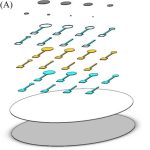
Prof. Todd Coleman et al describe a methodology that can be used to optimize the impedance characteristics of electrodes and can be applied to the design of other stretchable electronics for different target frequencies, materials and electrode sizes.
Read more about Electrochemical performance study of Ag/AgCl and Au flexible electrodes for unobtrusive monitoring of human biopotentials

Prof. Reinhold Dauskardt et al determined that for film used as an anti-fingerprint coating on touchscreen displays, humidity and other field operating conditions affect film properties making optimal cross-linking characteristics less certain, as well as the precursor chemistry to achieve them.
Read more about Insights into the mechanical properties of ultrathin perfluoropolyether−silane coatings
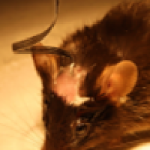
Prof. Zhenan Bao, Prof. Xiaoke Chen et al describe a stretchable, neurochemical biological interface termed NeuroString that enables in vivo real-time, monoamine sensing in the brain, as well as measuring serotonin dynamics in the gut without disturbing peristaltic movement.
Read more about A tissue-like neurotransmitter sensor for the brain and gut

Prof. Amin Arbabian et al demonstrate a novel modulator that could enable megapixel-resolution LiDAR and 3D capture with low-cost, standard image sensors as on phones with minimal extra hardware.
Read more about Longitudinal piezoelectric resonant photoelastic modulator for efficient intensity modulation at megahertz frequencies
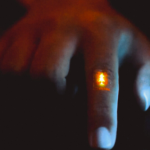
Prof. Zhenan Bao, Prof. Reinhold Dauskardt et al report a material design strategy and fabrication processes to achieve stretchable all-polymer-based light-emitting diodes colored red, green and blue that are wirelessly powered while worn and display real-time pulse signals.
Read more about High-brightness all-polymer stretchable LED with charge-trapping dilution

Prof. Zhenan Bao, Prof. David Myung, Prof. Sei Kwang Hahn et al demonstrate that smart contact lenses can accurately monitor changing blood glucose levels in diabetic and normal rabbits, and they evaluate the clinical feasibility and safety of the smart contact lenses for the human eye.
Read more about Bimetallic nanocatalysts immobilized in nanoporous hydrogels for long-term robust continuous glucose monitoring of smart contact lens
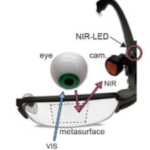
Prof. Mark Brongersma et al demonstrate a metasurface patterned on a regular pair of eyeglasses providing an unperturbed view of the world across the visible spectrum while redirecting near-infrared light to a camera, which allows imaging of the eye.
Read more about Nonlocal metasurfaces for spectrally decoupled wavefront manipulation and eye tracking
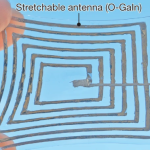
Prof. Zhenan Bao et al report intrinsically stretchable diodes capable of operating at a frequency high enough for wireless operation of soft sensors and electrochromic display pixels using RFID, in which the base-carrier frequency is 6.78 MHz or 13.56 MHz.
Read more about High-frequency and intrinsically stretchable polymer diodes
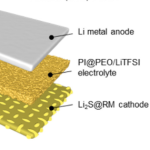
Prof. Yi Cui, Prof. Zhenan Bao et al directly track the sulfur speciation and reveal the redox chemistry for Li2S cathodes in ASSLSBs for the first time by using operando sulfur K-edge X-ray absorption spectroscopy.
Read more about All-solid-state lithium–sulfur batteries (ASSLSBs) enhanced by redox mediators (RM)
