
Prof. Steven Collins, Prof. Monroe Kennedy et al find that eye fixation data, measured using Meta Aria glasses, is especially useful in predicting when a person would slow down their walking.
Read more about Comparing utility of inertial, occupancy, semantic, and intent information in human motion prediction during daily tasks
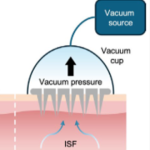
Prof. Joseph DeSimone et al conclude that vacuum-assisted hollow microneedle platforms provide a practical route for generating pressure gradient-driven ISF transport with minimally invasive skin access for self-administered or wearable continuous monitoring.
Read more about Vacuum-assisted microneedle platforms for dermal interstitial fluid (ISF) sampling
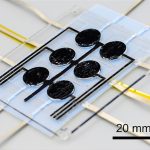
Prof. Zhenan Bao et al developed a materials design strategy for low-voltage DEAs and demonstrate a proof-of-concept array of haptic actuators for future wearable electronics or soft robotics.
Read more about A skin-inspired high-κ self-healing polymer for low-voltage dielectric elastomer actuators (DEAs)
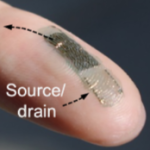
Prof. Zhenan Bao et al demonstrate a skin-conformal, electrolyte-gated-organic field-effect transistor (EG-OFET) bioelectronic sensor with cortisol detection sensitivity down to picomolar concentration.
Read more about Biofunctionalized polymer semiconductors toward soft and stretchable transistor-based biosensors
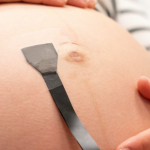
Prof. Sheng Xu et al reported UPatch that adheres to the maternal abdomen to visualize fetal anatomy and measure continuous fetal heart rate and blood flow without a sonographer.
Read more about Fetal monitoring for high-risk pregnancies using a wearable ultrasound patch
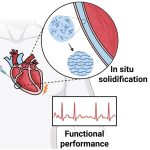
Prof. Vivian Feig et al present a design framework and then examine how it guides development of functional devices delivered as flowable precursors that then assemble into macroscopic, tissue-conformal devices at the target site, enabling minimally invasive implantation.
Read more about A design framework for in situ-forming medical devices: From drug delivery to tissue regeneration and bioelectronics
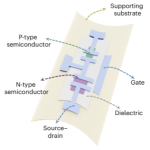
Prof. Zhenan Bao et al fabricate intrinsically stretchable logic gates and ring oscillators with stable performance up to 100% strain at a low operating voltage of 2 V.
Read more about Intrinsically stretchable complementary circuits based on direct photo-patternable polymer semiconductors
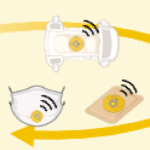
Prof. Ada Poon, Prof. Philip Wong et al report a sensor that combines a light emitting diode with a light-dependent resistor, which is self-powered by a galvanic cell when in contact with bodily fluid, such as urine, tears, saliva, or blood.
Read more about Minimalistic, disposable wireless electrochemical sensors: Integrating self-powered amperometry with direct inductive coupling
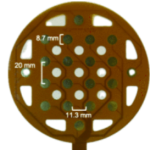
Prof. Todd Coleman, Prof. Zhenan Bao and Leen A. Razzak design and demonstrate a patch for high-resolution electrogastography and find that the design using elastomeric Ag/AgCl with conductive hydrogel functionalization is more efficiently fabricated and has lower impedance magnitude.
Read more about Functionalized adhesive thin flexible electrode arrays for large-scale unobtrusive ambulatory monitoring of neuromuscular activity
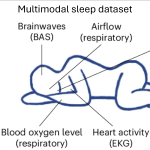
Prof. James Zou, Prof. Emmanuel Mignot et al developed SleepFM that accommodates multiple polysomnography configurations and produces latent sleep representations to capture the physiological and temporal structure of sleep and to enable accurate prediction of future disease risk.
Read more about SleepFM: A multimodal sleep foundation model for disease prediction
