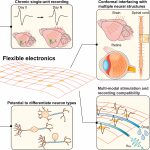
Prof. Guosong Hong, Prof. Alberto Salleo, et al discuss that flexible electronics will play a major role in neuroscience studies and neurological therapies via neuromorphic devices on flexible substrates and the development of enhanced methods of neuronal interpenetration.
Read more about How is flexible electronics advancing neuroscience research?

Prof. David Camarillo, Prof. Gerald Grant, Prof. Michael Zeineh et al test three kinds of mouthguards and discuss their accuracy and implications for design.
Read more about Validation and comparison of instrumented mouthguards for measuring head kinematics and assessing brain deformation in football impacts
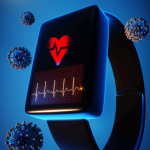
Prof. Michael Snyder et al describe results indicating that activity tracking and health monitoring via consumer wearable devices may be used for the large-scale, real-time detection of respiratory infections.
Read more about Pre-symptomatic detection of COVID-19 from smartwatch data
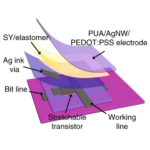
Prof. Zhenan Bao, Prof. Reinhold Dauskardt et al demonstrate the feasibility of displays mounted on the skin using robust materials and processes that serve as a reference for further materials development.
Read more about Fully stretchable active-matrix organic light-emitting electrochemical cell array
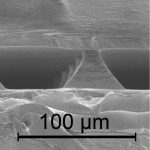
Prof. Zhenan Bao et al review how microengineering is used to improve the performance of capacitive, resistive, piezoelectric, and triboelectric pressure sensors and describe potential future needs of the field to efficiently meet the growing demand for new pressure sensors in the biomedical space.
Read more about Microengineering pressure sensor active layers for improved performance

Prof. Allison Okamura and Julie M. Walker report a study showing navigation guidance via a holdable or wearable haptic device.
Read more about Effect of behavioral realism on social interactions inside collaborative virtual environments

Prof. Zhenan Bao et al demonstrate a novel sensor that can differentiate the pliability of various objects to be grasped by a robot.
Read more about A bioinspired stretchable membrane-based compliance sensor

Prof. Zhenan Bao et al develop a model to predict sensor performance trends prior to device fabrication and demonstrate the method can be used to preferentially design a pressure sensor for in vitro pulse sensing.
Read more about Rational design of capacitive pressure sensors based on pyramidal microstructures for specialized monitoring of biosignals

Prof. Eric Appel, Prof. Tom Soh et al identify and validate the utility of a hydrogel formulation for improving the in vitro and in vivo performance of biosensor devices.
Read more about Combinatorial polyacrylamide hydrogels for preventing biofouling on implantable biosensors

Amit Etkin et al identify an EEG signature in persons with depression that predicts whether the antidepressant sertraline will be effective for the individual.
Read more about An electroencephalographic (EEG) signature predicts antidepressant response in major depression
