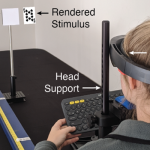
Prof. Gordon Wetzstein et al introduce a stereo rendering technique that models the gaze-dependent shift of the no-parallax point in the human eye and show that gaze-contingent stereo rendering improves the perceptual realism and depth perception of emerging wearable computing systems.
Read more about Optimizing depth perception in virtual and augmented reality through gaze-contingent stereo rendering
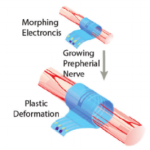
Prof. Zhenan Bao et al review polymeric devices that have shown feasibility in studies with potential for clinical adoption.
Read more about Conjugated polymer for implantable electronics toward clinical application

Caitlyn Seim, Steven Wolf and Thad Starner show that VTS applied to a disabled limb may positively impact tactile perception, tone and spasticity, and voluntary range of motion.
Read more about Wearable vibrotactile stimulation (VTS) for upper extremity rehabilitation in chronic stroke: clinical feasibility trial using the VTS glove
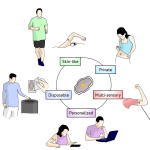
Prof. Pablo Paredes, Prof. Zhenan Bao, Prof. Boris Murmann et al. outline design considerations of a wearable device for continuously measuring physiological parameters linked to chronic stress and resulting mental health conditions.
Read more about Design considerations of a wearable electronic-skin for mental health and wellness: balancing biosignals and human factors
