The Chen IPL & eWEAR-X Symposium
Category: Conferences
Join us for a Symposium and Demo Showcase for The Tianqiao and Chrissy Chen Ideation and Prototyping Lab (IPL)
& eWEAR-X
Date: Thursday, March 12, 2026
Time: 1:30pm – 4:30pm PDT
Location: AllenX 101X (Paul G. Allen Building), Stanford University (330 Jane Stanford Way, Stanford, CA 94305) This event will only be in-person (parking details below)
Registration: Pre-Registration Closed. Please register at the check-in desk for the event
Affiliate Registration– eWEAR Affiliate member companies, VIPs, and the Stanford University community with SUNetID.
Non-affiliate Registration– Prospective members and others may pay to attend ($50), space is limited.
Questions? Ask wearable-electronics@stanford.edu
Agenda & Speakers:
1:00 pm | Check-in
1:30 pm | Opening Remarks: Angela McIntyre, Professor Zhenan Bao, Professor Xiang Qian
2:00 pm | Professor Emmanuel Mignot, “Foundation Models and Analytics of Sleep”
2:20 pm | Professor Le Cong, “From Molecules to Machines: Building Modes, Agents, AI-XR Co-scientist to Accelerate Biomedical Innovation”
2:40 pm | Professor Jiajun Wu, “Physically-Grounded, Contact-Aware Perception, Prediction, and Manipulation”
3:00 pm | Lightning Talks by demo presenters
3:35 pm | Demo Showcase (view demos) and reception
4:30 pm | Event concludes
Abstracts and Bios:

Zhenan Bao
K.K. Lee Professor of Chemical Engineering
Stanford University
Bio
Prior to joining Stanford in 2004, she was a Distinguished Member of Technical Staff in Bell Labs, Lucent Technologies from 1995-2004. She received her Ph.D in Chemistry from the University of Chicago in 1995. She has more than 700 refereed publications and over 80 US patents with a Google Scholar H-Index 206 and is one of the world’s most highly cited scholars in the fields of chemistry and material science. She is one of the Clarivate Citation Laureates in Chemistry for her pioneering work on skin-inspired electronics.
Bao is a member of the National Academy of Engineering, the American Academy of Arts and Sciences and the National Academy of Inventors. She a foreign member of the Chinese Academy of Science. She has been serving on the Board of Directors of the Camille and Henry Dreyfus Foundation and scientific affair committee from 2022. She is an advisor for the Science for America, a solutions incubator to address urgent challenges, driven by an unprecedented alliance of leading philanthropic organizations.
Bao is a recipient of the VinFuture Prize Female Innovator 2022, the ACS Chemistry of Materials Award 2022, MRS Mid-Career Award in 2021, AICHE Alpha Chi Sigma Award 2021, ACS Central Science Disruptor and Innovator Prize in 2020, Gibbs Medal 2020, Wilhelm Exner Medal2018, ACS Award on Applied Polymer Science 2017, L’Oréal-UNESCO For Women in Science Award 2017.
Bao is a co-founder and on the Board of Directors for C3 Nano and PyrAmes, both are silicon-valley venture funded start-ups. Research inventions from her group have been licensed and are foundational technologies of multiple start-ups founded by her students. Bao serves as an advisor for Fusion Venture and Boutique Venture.
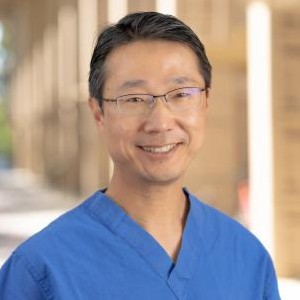
Xiang Qian, MD
Stanford Medicine Endowed Director; Clinical Professor, Anesthesiology, Perioperative And Pain Medicine; Clinical Professor (By Courtesy), Neurosurgery
Stanford University
Bio
Dr. Qian is highly respected for his work on developing novel therapies for various chronic pain conditions, and he lectures internationally for those work and topics. Dr. Qian’s clinical interests include the treatment of acute and chronic pain, with special interest in migraine, headache, trigeminal neuralgia, glossopharyngeal neuralgia, hemifacial spasm, atypical facial pain, cancer pain, back pain, joint pain, nerve pain, and others. At Stanford, Dr. Qian developed many advanced surgical and interventional technologies for his patients, and he currently leads the CT-guided interventional pain program and is the recipient of Translational and Clinical Innovation Award at Stanford.
With his deep interest in clinical innovation and translational medicine, Dr. Qian is the faculty professor of Stanford Wearable Electronics Initiative (eWEAR) and has been working with colleagues from engineering school to develop mini implantable nerve stimulator, powered by wireless energy. Similar to a pacemaker for the heart, nerve stimulators are modulators for the nerves.
Due to his passion for global health and leadership experience, Dr. Qian was appointed as the Medical Director of Stanford International Medical Services (IMS) since 2016, where he has been working in collaboration with faculty members from all subspecialties and hospital administrations to help deliver care for international patients and promote international collaborations. His vision is to help Stanford become the leader in international medicine by providing its physicians and faculty the opportunities to expand their practice internationally and spread knowledge globally.
Dr. Qian completed his residency and fellowship training at Stanford. Prior to that, he received his PhD degree in Physiology and Biophysics from University of Miami Miller School of Medicine, and went through Postdoc fellowship training in Neuroscience at UCSF. Outside of the work he does at Stanford, Dr. Qian founded the Chinese American Physicians’ Society to foster his efforts in bringing medical knowledge internationally. Today, the society has more than 600 physician members from 50 states of the US, across over 38 different subspecialties.
In his free time, Dr. Qian enjoys reading, running, hiking and exploring the mountains and beaches of Northern California.
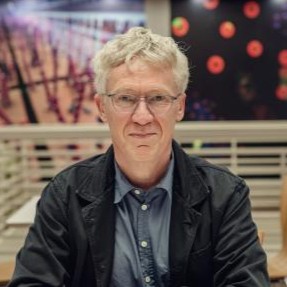
Emmanuel Mignot
Craig Reynolds Professor of Sleep Medicine in the department of Medicine and Professor, by courtesy, of Genetics and of Neurology and Neurological Sciences
Stanford University
Abstract
Bio
Dr. Mignot positionally cloned a mutation in the dog causing narcolepsy (hypocretin/orexin receptor 2) and discovered that narcolepsy, affecting 1/2000 people, is caused by an immune-mediated destruction of 70,000 hypocretin/orexin neurons in the hypothalamus, also revealing hypocretins as a novel critical sleep-regulatory pathway. Most of his current research focuses on the neurobiology, genetics and immunology of narcolepsy, with indirect interest in the neuroimmunology of other brain disorders such as autoimmune encephalitis or neurological paraneoplastic syndromes.
His laboratory also uses state of the art human genetics, proteomics and immunology techniques, such as genome-wide association, exome or whole genome sequencing or large scale proteomics in the study of human sleep and sleep disorders, with parallel studies in animal models. His laboratory is lastly interested in web-based assessments of sleep disorders, and conducts deep learning-based processing of polysomnography (PSG), and outcome research.
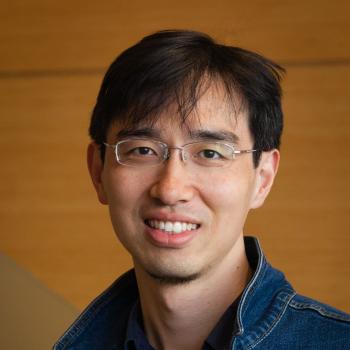
Le Cong
Associate Professor of Pathology and of Genetics
Stanford University
Abstract
Bio
Dr. Cong’s work has led to one of the first CRISPR/Cas9 gene-editing tools for in vivo gene therapy. More recently, his group invented tools for cleavage-free large gene insertion with novel recombination proteins (SSAP editor), and developed machine-learning optimized single-cell methods (DAISY) for studying cancer and immune diseases. Dr. Cong is a recipient of the NHGRI Genomic Innovator Award, Baxter Foundation Faculty Scholar, Genetic Engineering and Biotechnology News (GEN) Top 10 Under 40, Clinical OMICs Pioneers Under 40, and Clarivate Web of Science Highly Cited Researcher.
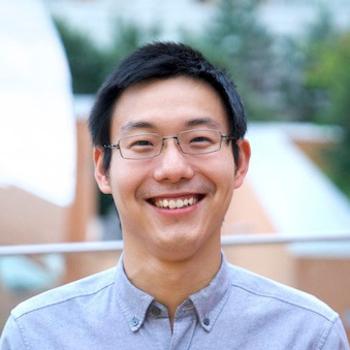
Jiajun Wu
Assistant Professor of Computer Science and, by courtesy, of Psychology
Stanford University
Abstract
Bio
Demo Showcase:
Wireless Precision Peptide Delivery in a Miniaturized Implant
PI: Prof. Siddharth Krishnan
Team: Mitch Peterson, Sunghoon Rho, Huy Tran, Xiaoqin Wang
AirAware: A Wearable System for Environmental Exposure Monitoring
PI: Prof. Michael Snyder
Team:Dr. Allison Zhang
A Wearable EOG Platform for Monitoring Diagnostic Eye Movements During Vertigo
PI: Prof. Kristen Steenerson
Team: Danyang Fan, Brad Liang
Wearable Device for the Measurement of Human Breast Lactation
PI: Prof. Zerina Kapetanovic
Team: Jasmin Falconer, Baiyu Shi, Junyi Zhao
Tracheal Acoustic Monitoring for the Detection of Respiratory Airflow
PI: Prof. Chris Chafe and Prof. Matthew Muffly
Team: Chris Relyea
Custom Electronics for Ambulatory, Multimodal, Multi-Electrode Monitoring of Abdominal Electrophysiology
PI: Prof. Todd Coleman
Team: Syamantak Payra, Sophia Shen, Leen Abdul Razzak
LacTrax: A Wearable, Continuous Lactate Sensor
PI: Prof. Brian Han
Team: Dr. Ross Venook, Caio Carcaioli Bonin, Julia Kao-Sowa
DexSkin: A Step Toward Human Sense of Touch for Robots
PI: Prof. Jiajun Wu
Team: Baiyu Shi
Fiber Bioelectronics for Precision Medicine
PI: Prof. Zhenan Bao
Team: Muhammad Khatib

Angela McIntyre, Host
Executive Director of eWEAR
Stanford University
Bio

Katryna Dillard
Program Manager of eWEAR
Stanford University
Bio
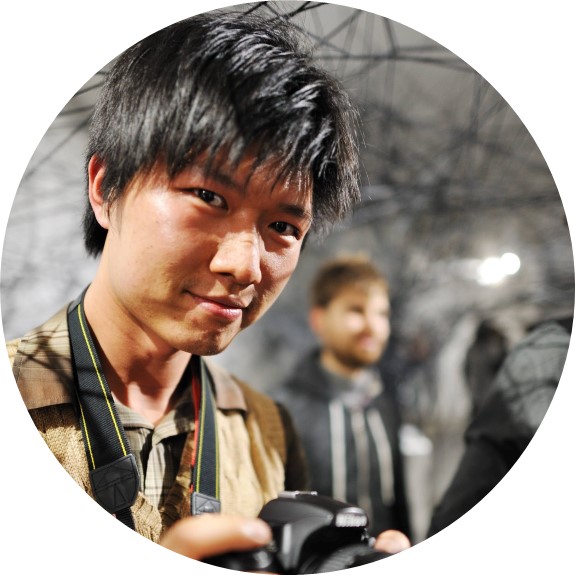
Yilei Wu, Photographer
Lab Manager, Chemistry
Stanford University
Bio
Parking Details
Seminar Location: AllenX 101X, (420 Via Palou, Stanford, CA 94305, Paul G. Allen Building)
Garage/Lot Options (click here for more):
Via Ortega Garage (Zone 7202): 498 Via Ortega, Stanford, CA 94305 (Map from garage to event location)
Rates (click here for more):
Per hour = $4.46
Day pass = $35.68
(parking is free after 4pm)
The following three options are available to pay for parking:
- Download the app and set up a Park Mobile account. It is recommended to do this before coming to campus.
- Pay Online (No app or account needed): Navigate to app.parkmobile.io/zone/start or text “PARK” to 77223 and follow the steps to pay.
- Pay-By-Phone if you don’t have a smartphone or prefer an automated voice system, call ParkMobile at 877.727.5718 to start your parking session.
Safety Protocol: Stanford strongly recommends to mask when ill with respiratory symptoms. Stanford University Health Alerts.
