Celebration Symposium for The Tianqiao and Chrissy Chen Ideation and Prototyping Lab
Category: Conferences
Join us for a Symposium and the Announcement and Ribbon Cutting Ceremony of The Tianqiao and Chrissy Chen Ideation and Prototyping Lab (IPL).
Date: Monday, March 3, 2025
Time: 9:00 am – 12:00 pm PST
Location: AllenX 101X (Paul G. Allen Building, 330 Jane Stanford Way, Stanford, CA 94305) This event will only be in-person (parking)
Questions? Ask wearable-electronics@stanford.edu
Agenda & Speakers:
9:00 am | Check-in & Continental Breakfast
9:30 am | Opening Remarks, Professor Zhenan Bao, Professor Xiang Qian, & Chrissy Luo
10:00 am | Professor Michael Snyder, “Transforming Healthcare Using Wearables and Remote Monitoring”
10:20 am | Professor Oussama Khatib, Overview of Projects in the Stanford Robotics Center
10:40 am | Professor Jaimie Henderson, M.D., “Recent Advances in Intracortical Brain-Computer Interfaces”
11:00 am | Special Remarks by Jennifer Widom, Dean of the School of Engineering, Professor Andrew Spakowitz, Chair of Chemical Engineering, and Professor Mark Horowitz, Chair of Electrical Engineering
11:20 am | Ribbon Cutting Ceremony
12:00 pm | Windows tour of Stanford Nanofabrication Facility
agenda subject to change
Abstracts and Bios:
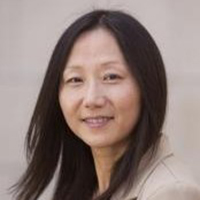
Zhenan Bao
K.K. Lee Professor of Chemical Engineering
Stanford University
Bio
Prior to joining Stanford in 2004, she was a Distinguished Member of Technical Staff in Bell Labs, Lucent Technologies from 1995-2004. She received her Ph.D in Chemistry from the University of Chicago in 1995. She has more than 700 refereed publications and over 80 US patents with a Google Scholar H-Index 206 and is one of the world’s most highly cited scholars in the fields of chemistry and material science. She is one of the Clarivate Citation Laureates in Chemistry for her pioneering work on skin-inspired electronics.
Bao is a member of the National Academy of Engineering, the American Academy of Arts and Sciences and the National Academy of Inventors. She a foreign member of the Chinese Academy of Science. She has been serving on the Board of Directors of the Camille and Henry Dreyfus Foundation and scientific affair committee from 2022. She is an advisor for the Science for America, a solutions incubator to address urgent challenges, driven by an unprecedented alliance of leading philanthropic organizations.
Bao is a recipient of the VinFuture Prize Female Innovator 2022, the ACS Chemistry of Materials Award 2022, MRS Mid-Career Award in 2021, AICHE Alpha Chi Sigma Award 2021, ACS Central Science Disruptor and Innovator Prize in 2020, Gibbs Medal 2020, Wilhelm Exner Medal2018, ACS Award on Applied Polymer Science 2017, L’Oréal-UNESCO For Women in Science Award 2017.
Bao is a co-founder and on the Board of Directors for C3 Nano and PyrAmes, both are silicon-valley venture funded start-ups. Research inventions from her group have been licensed and are foundational technologies of multiple start-ups founded by her students. Bao serves as an advisor for Fusion Venture and Boutique Venture.
Abstract

Xiang Qian, M.D.
Stanford Medicine Endowed Director; Clinical Professor, Anesthesiology, Perioperative And Pain Medicine; Clinical Professor (By Courtesy), Neurosurgery
Stanford University
Bio
Dr. Qian is highly respected for his work on developing novel therapies for various chronic pain conditions, and he lectures internationally for those work and topics. Dr. Qian’s clinical interests include the treatment of acute and chronic pain, with special interest in migraine, headache, trigeminal neuralgia, glossopharyngeal neuralgia, hemifacial spasm, atypical facial pain, cancer pain, back pain, joint pain, nerve pain, and others. At Stanford, Dr. Qian developed many advanced surgical and interventional technologies for his patients, and he currently leads the CT-guided interventional pain program and is the recipient of Translational and Clinical Innovation Award at Stanford.
With his deep interest in clinical innovation and translational medicine, Dr. Qian is the faculty professor of Stanford Wearable Electronics Initiative (eWEAR) and has been working with colleagues from engineering school to develop mini implantable nerve stimulator, powered by wireless energy. Similar to a pacemaker for the heart, nerve stimulators are modulators for the nerves.
Due to his passion for global health and leadership experience, Dr. Qian was appointed as the Medical Director of Stanford International Medical Services (IMS) since 2016, where he has been working in collaboration with faculty members from all subspecialties and hospital administrations to help deliver care for international patients and promote international collaborations. His vision is to help Stanford become the leader in international medicine by providing its physicians and faculty the opportunities to expand their practice internationally and spread knowledge globally.
Dr. Qian completed his residency and fellowship training at Stanford. Prior to that, he received his PhD degree in Physiology and Biophysics from University of Miami Miller School of Medicine, and went through Postdoc fellowship training in Neuroscience at UCSF. Outside of the work he does at Stanford, Dr. Qian founded the Chinese American Physicians’ Society to foster his efforts in bringing medical knowledge internationally. Today, the society has more than 600 physician members from 50 states of the US, across over 38 different subspecialties.
In his free time, Dr. Qian enjoys reading, running, hiking and exploring the mountains and beaches of Northern California.

Chrissy Luo
Co-founder
Tianqiao & Chrissy Chen Institute
Bio
The organization’s vision is to improve the human experience by understanding how our brains perceive, learn, and interact with the world.
Chrissy was a co-founder of Shanda Interactive Entertainment Group in 1999, which has been credited with pioneering the online game and online literature industries in China. Now Shanda Group, the couple’s family office, Chrissy oversees company-wide operations. Prior to Shanda, Chrissy was an investment banker.
Chrissy has a Bachelor of Economics degree from the China Institute of Finance (now part of the University of International Business and Economics).

Michael Snyder
Stanford W. Ascherman Professor, Department of Genetics, Director, Stanford Center for Genomics and Personalized Medicine, School of Medicine
Stanford University
Bio
Abstract

Oussama Khatib
Weichai Professor Computer Science and Professor, by courtesy, of Electrical Engineering
Stanford University
Bio
Abstract

Jaimie Henderson, MD
John and Jene Blume – Robert and Ruth Halperin Professor, Professor of Neurosurgery and, by courtesy, of Neurology and Neurological Sciences
Stanford University
Bio
Abstract

Jennifer Widom
Frederick Emmons Terman Dean of the School of Engineering, Fletcher Jones Professor of Computer Science and Professor of Electrical Engineering, School of Engineering
Stanford University
Bio

Andrew Spakowitz
Tang Family Foundation Chair of the Department of Chemical Engineering, Professor of Chemical Engineering, of Materials Science and Engineering and, by courtesy, of Applied Physics
Stanford University
Bio

Mark Horowitz
Fortinet Founders Chair of the Department of Electrical Engineering, Yahoo! Founders Professor in the School of Engineering and Professor of Computer Science
Stanford University
Bio
In the 2000s he started a long collaboration with Prof. Levoy on computational photography, which included work that led to the Lytro camera, whose photographs could be refocused after they were captured.. Dr. Horowitz’s current research interests are quite broad and span using EE and CS analysis methods to problems in neuro and molecular biology to creating new agile design methodologies for analog and digital VLSI circuits. He remains interested in learning new things, and building interdisciplinary teams.

Angela McIntyre, Host
Executive Director of eWEAR
Stanford University
Bio

Katryna Dillard
Program Manager of eWEAR
Stanford University
Bio
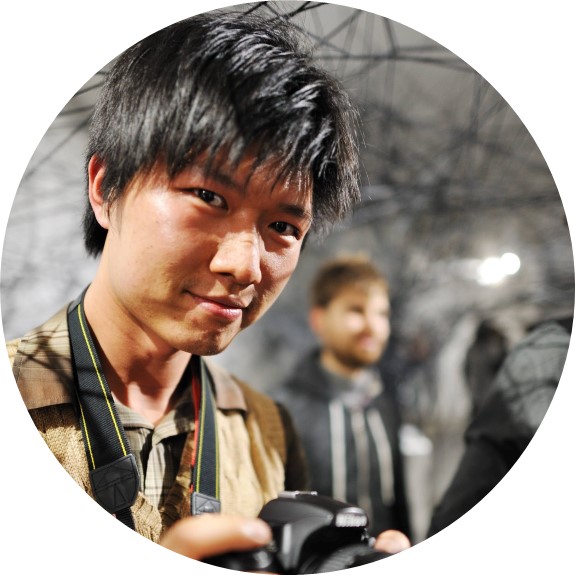
Yilei Wu, Photographer
Lab Manager, Chemistry
Stanford University
Bio
Parking Details
Seminar Location: AllenX 101X, (420 Via Palou, Stanford, CA 94305, Paul G. Allen Building)
Garage/Lot Options (click here for more):
Via Ortega Garage (Zone 7202): 498 Via Ortega, Stanford, CA 94305 (Map from garage to event location)
Rates (click here for more):
Per hour = $4.46
Day pass = $35.68
The following three options are available to pay for parking:
- Download the app and set up a Park Mobile account. It is recommended to do this before coming to campus.
- Pay Online (No app or account needed): Navigate to app.parkmobile.io/zone/start or text “PARK” to 77223 and follow the steps to pay.
- Pay-By-Phone if you don’t have a smartphone or prefer an automated voice system, call ParkMobile at 877.727.5718 to start your parking session.
Safety Protocol: Stanford strongly recommends to mask when ill with respiratory symptoms. Stanford University Covid-19 Policies.
