eWEAR Annual Meeting Symposium 2024
Category: Conferences
Wednesday, February 7, 2024
Continental Breakfast | 9:00 am – 9:45 am PST (in-person only)
Morning Session | 9:45 am – 12:00 pm PST
Lunch | 12:00 pm – 1:30 pm PST (in-person only)
Afternoon Session | 1:30 pm – 4:00 pm PST
Poster Session | 4:00 pm – 6:00 pm PST (in person only)
Times are subject to change
Affiliate Registration – eWEAR Affiliate member companies, VIPs, and the Stanford University community with SUNetID
Non-affiliate Registration – Prospective members and other paying attendees (please email wearable-electronics@stanford.edu)
Questions? Ask wearable-electronics@stanford.edu
Location: This will be a hybrid event live on Zoom and in person at Stanford University. If you are interested in attending in-person please select “yes” to attending in-person when registering above.
Use the buttons below to jump to a specific section:
Agenda & Speakers:
9:45 am | Angela McIntyre, Welcome
10:00 am | Professor Zhenan Bao, “Soft electronic neural sensors and interfaces”
10:30 am | Professor Gen Shinozaki, M.D., “Game changing approach for delirium: Bispectral EEG (BSEEG) device to detect delirium and predict outcomes”
11:00 am | Professor Xiang Qian, M.D., “Breaking the pain cycle: Innovative therapies for headache and facial pain”
11:30 am | Professor Ada Poon, “A battery-free sticker-like reader for wireless passive sensors”
12:00 pm | Lunch
1:30 pm | Professor David Eagleman, “Can we create new senses for humans?”
2:00 pm | Poster Preview
2:30 pm | Panel Discussion– “Wearables and their data in healthcare”: Ritu Kapur, Ph.D. (Verily Numetric); Daniel Kraft, M.D. (NextMed Health, Digital.Health, and Continuum Health Ventures); Paul Upham, (Genentech/Roche); Ray Woo, Ph.D. (Ceribell, Inc); Nichole Young-Lin, M.D. (Google; United Nations Population Fund); Moderator: Angela McIntyre
4:00 pm | Poster Session & Reception (In-person only, Huang Foyer, 4:00 pm-6:00 pm)
Abstracts and Bios:
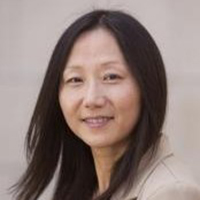
Zhenan Bao
K.K. Lee Professor of Chemical Engineering
Stanford University
Bio
Prior to joining Stanford in 2004, she was a Distinguished Member of Technical Staff in Bell Labs, Lucent Technologies from 1995-2004. She received her Ph.D in Chemistry from the University of Chicago in 1995. She has more than 700 refereed publications and over 80 US patents with a Google Scholar H-Index 206 and is one of the world’s most highly cited scholars in the fields of chemistry and material science. She is one of the Clarivate Citation Laureates in Chemistry for her pioneering work on skin-inspired electronics.
Bao is a member of the National Academy of Engineering, the American Academy of Arts and Sciences and the National Academy of Inventors. She a foreign member of the Chinese Academy of Science. She has been serving on the Board of Directors of the Camille and Henry Dreyfus Foundation and scientific affair committee from 2022. She is an advisor for the Science for America, a solutions incubator to address urgent challenges, driven by an unprecedented alliance of leading philanthropic organizations.
Bao is a recipient of the VinFuture Prize Female Innovator 2022, the ACS Chemistry of Materials Award 2022, MRS Mid-Career Award in 2021, AICHE Alpha Chi Sigma Award 2021, ACS Central Science Disruptor and Innovator Prize in 2020, Gibbs Medal 2020, Wilhelm Exner Medal2018, ACS Award on Applied Polymer Science 2017, L’Oréal-UNESCO For Women in Science Award 2017.
Bao is a co-founder and on the Board of Directors for C3 Nano and PyrAmes, both are silicon-valley venture funded start-ups. Research inventions from her group have been licensed and are foundational technologies of multiple start-ups founded by her students. Bao serves as an advisor for Fusion Venture and Boutique Venture.
Abstract

Gen Shinozaki, M.D.
Associate Professor of Psychiatry and Behavioral Sciences (General Psychiatry and Psychology (Adult))
Stanford University
Bio
Abstract

Xiang Qian, M.D.
Stanford Medicine Endowed Director; Clinical Professor, Anesthesiology, Perioperative And Pain Medicine; Clinical Professor (By Courtesy), Neurosurgery
Stanford University
Bio
Dr. Qian is highly respected for his work on developing novel therapies for various chronic pain conditions, and he lectures internationally for those work and topics. Dr. Qian’s clinical interests include the treatment of acute and chronic pain, with special interest in migraine, headache, trigeminal neuralgia, glossopharyngeal neuralgia, hemifacial spasm, atypical facial pain, cancer pain, back pain, joint pain, nerve pain, and others. At Stanford, Dr. Qian developed many advanced surgical and interventional technologies for his patients, and he currently leads the CT-guided interventional pain program and is the recipient of Translational and Clinical Innovation Award at Stanford.
With his deep interest in clinical innovation and translational medicine, Dr. Qian is the faculty professor of Stanford Wearable Electronics Initiative (eWEAR) and has been working with colleagues from engineering school to develop mini implantable nerve stimulator, powered by wireless energy. Similar to a pacemaker for the heart, nerve stimulators are modulators for the nerves.
Due to his passion for global health and leadership experience, Dr. Qian was appointed as the Medical Director of Stanford International Medical Services (IMS) since 2016, where he has been working in collaboration with faculty members from all subspecialties and hospital administrations to help deliver care for international patients and promote international collaborations. His vision is to help Stanford become the leader in international medicine by providing its physicians and faculty the opportunities to expand their practice internationally and spread knowledge globally.
Dr. Qian completed his residency and fellowship training at Stanford. Prior to that, he received his PhD degree in Physiology and Biophysics from University of Miami Miller School of Medicine, and went through Postdoc fellowship training in Neuroscience at UCSF. Outside of the work he does at Stanford, Dr. Qian founded the Chinese American Physicians’ Society to foster his efforts in bringing medical knowledge internationally. Today, the society has more than 600 physician members from 50 states of the US, across over 38 different subspecialties.
In his free time, Dr. Qian enjoys reading, running, hiking and exploring the mountains and beaches of Northern California.
Abstract

Ada Poon
Associate Professor of Electrical Engineering
Stanford University
Bio
Abstract

David Eagleman
Adjunct Professor of Psychiatry
Stanford University
Bio
Abstract

Ritu Kapur, Ph.D.
Head of Digital Biomarkers, Verily Numetric
Visiting Professor, Department of Neurology, Radboud University Medical Center, Netherlands
Bio
Dr. Kapur is a Neuroscientist with over 15 years of experience in evidence generation, medical device development, neuromodulation, and signal processing. Her focus is on using traditional and machine learning methods to extract clinically relevant information from implanted and wearable sensors, building a base of evidence for their usefulness and validity, and making these technologies available to serve the needs of people living with disease. She is also a Visiting Full Professor by Special Appointment at the Radboud University Medical Center Department of Neurology.
Prior to joining Verily, Dr. Kapur was a Senior Clinical Research Scientist at NeuroPace, and part of the team that successfully completed a PMA for the world’s first brain-responsive neurostimulator for the treatment of epilepsy. Dr. Kapur received a Doctorate in Neuroscience from the University of California, San Francisco, where she specialized in signal processing and awake behaving electrophysiology. She also graduated from Stanford in 1998, with a degree in Human Biology.

Daniel Kraft, M.D.
Founder
NextMed Health, Digital.Health, and Continuum Health Ventures
Bio
He is founder of NextMed Health, a program that explores accelerating technologies & the future of medicine and Digital.Health, a platform enabling discovery and use of digital medicine solutions. Daniel is a partner with Continuum Health Ventures funding early stage digital health & longevity startups.
Following undergraduate degrees from Brown University and medical school at Stanford, Daniel was Board Certified in both Internal Medicine & Pediatrics after completing a Harvard residency at the Massachusetts General Hospital & fellowships in hematology, oncology, & stem cell transplantation at Stanford. He has published in Nature and Science through faculty positions at Stanford and UCSF.
Daniel is a member of the Inaugural class of the Aspen Institute Health Innovators Fellowship & is member of the Kaufman Fellows Society. He has given 4TEDTalks. An avid pilot, he served as a flight surgeon in F-15 & F-16 squadrons and was a finalist for NASA Astronaut selection.

Paul Upham
Head of Smart Devices
Genentech/Roche
Bio
Prior to Roche / Genentech, Paul was with Becton Dickinson(BD), as Worldwide Director of Strategic Marketing in their Pharmaceutical Systems business.
Paul was also the head of Product at WellDoc, Inc., where he led the product management activities for WellDoc’s portfolio of mobile health solutions. He was responsible for WellDoc’s landmark BlueStar™ product, a class II medical device and the world’s first reimbursed, prescription-only software for diabetes.
Paul’s prior experience includes 10 years in BD’s Diabetes Care business. Paul was responsible for the award-winning BD InterActiv® Diabetes Software, and was a member of the BD / Medtronic team that launched ParadigmLink®, the world’s first wireless blood glucose meter.
Paul holds four issued patents in medical software and drug delivery devices and has multiple patent applications. He is also an author of numerous peer-reviewed articles in medical informatics and diabetes. His education includes undergraduate studies in cognitive science and graduate work in health informatics and finance at the University of Minnesota and New York University.

Raymond Woo, Ph.D.
Bio

Nichole Young-Lin, M.D., MBA
Women’s Health Clinical Lead, Google
Adjunct Clinical Assistant Professor, Obstetrics & Gynecology-General, Stanford University
Bio
Dr. Nichole Young-Lin is a practicing board-certified obstetrician-gynecologist and the Women’s Health Clinical Lead at Google. Her work includes product development (Fitbit), AI research projects (including generative AI), and supporting women’s health efforts across Google’s platforms. She also currently serves on the board of the UNFPA West Africa Innovation Board. Her background is in global health, having co-founded an international maternal health nonprofit that works to empower providers in low-resource areas and worked as a technical advisor for digital health projects at the World Health Organization.
Dr. Young-Lin received her medical degree (MD) from the University of California, San Francisco (UCSF) and her masters in business administration (MBA) from Duke University’s Fuqua School of Business. She completed her residency training at Stanford University where she continues to serve as adjunct faculty.
Poster Presenters (in-person, Huang Foyer):
Matias Horst, “Mechanochemistry of fused cyclobutanes”
Ali Kight, “VITALS: Versatile implant for telemetry and longitudinal sensing of cardiac function”
Sara Parmigiani, “Theta burst modulation of the frontoparietal circuit in humans”
Sebastian Hendrickx-Rodriguez & Ashley David, “Surface interactions at the interface of polymers and skin”
Lara Weed, “Variation of 24-h sleep patterns across the menstrual cycle: An observational study using wearable sensors”
Jaeho Park, “A wearable system for real-time monitoring of multi-modal mental health biomarkers”
Eunyoung (Grace) Kim, “Transparent, patternable solid electrode for dielectric elastomer actuators”
Arielle Berman, “A multifunctional pressure and strain sensor for tactile compliance identification”
Ananya Goyal, “The aging knee: Changes in bone metabolic activity measured using [18F] NaF PET-MR imaging”
Pardis Miri, “Gamma entrainment through vibrotactile stimulation for individuals with autism”
Obumneme Osele, “Tip-Clutching winch for high tensile force application with soft growing robots”
Jihun Rho, “A disposable reader-sensor solution for wireless temperature logging”
Violet Xiang & Bobby Sparks, “The babyview camera: A head-mounted camera for capturing children’s early social and visual experiences”
Muhammad Khatib, “High density electronic fibers for multimodal sensing and stimulation”
Manchen Hu, “Self-powered and ultralight night vision system”
Daniel Fernandez & Olivia N. Pattelli, “MSKC – Stanford shared center for bioresearch”
Yuyan Wu, “EmotionVibes: Emotion recognition using footstep-induced floor vibrations”
Stephanie Boczek, “3D printed microneedle array patches (MAPs) for intradermal drug delivery”
Laura Moreno, “Reliability of fNIRS platform for precision mental health”
Dan Ilyn, “3D-Printed capacitive pressure sensors for wearable devices”
Shivani Guptasarma, “Task-based control of a prosthetic arm in immersive simulation”
Qi Li, “Flow-Controlled milli-spinner microsurgery for blood clot and kidney stone removal”
Anesta Kothari & Hope T. Leng, “Enabling local distributed manufacturing globally: Sustainable menstrual pad production from diverse sources of biomass”
Paul Schmiedmayer, Andreas Bauer, & Philipp Zagar, “Spezi: A standards-based open-source digital health development ecosystem”
Sophie Leanza, “Elephant trunk inspired multimodal deformations and movements of soft robotic arms”
Jatin Aggarwal & Doyun Hwang, “Pre-existing telecommunication fiber-optic cables for long-term bridge health monitoring”
Sreela Kodali, “Spatial summation of localized pressure for wearable haptic sensory prostheses”
Laura Rijns, “Design rules to control supramolecular hydrogel-cell interactions”
Koosha Nassiri Nazif, “Novel high-specific-power solar cells for powering wearable electronics”
Manu Gopakumar & Gun-Yeal Lee, “Full-Color metasurface waveguide holography”

Angela McIntyre, Host
Executive Director of eWEAR
Stanford University
Bio

Katryna Dillard
Program Manager of eWEAR
Stanford University
Bio
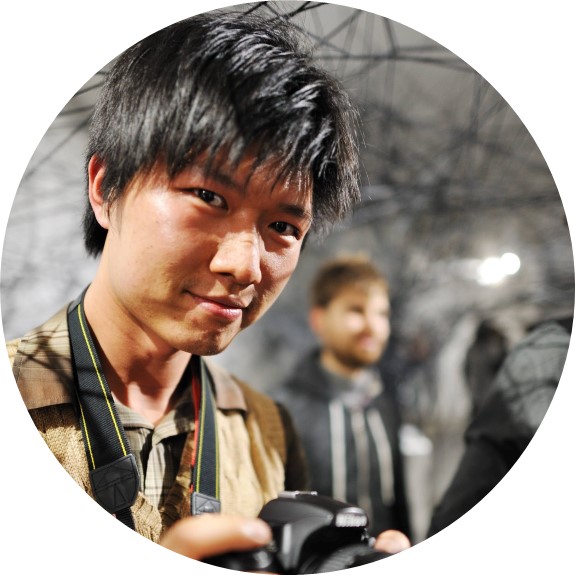
Yilei Wu, Photographer
Research Engineer, Chemical Engineering
Stanford University
Bio

Lucia Brunel, Poster Session Organizer
Ph.D. Candidate in Chemical Engineering
Stanford University
Bio
Lucia Brunel is pursuing her Ph.D. at Stanford University in the Department of Chemical Engineering. She obtained her B.S. and M.S. degrees in Chemical Engineering from Northwestern University (Goldwater Scholar) in 2018 and her M.Phil. degree in Materials Science from the University of Cambridge (Marshall Scholar) in 2019. Her research interests include 3D bioprinting, polymeric biomaterials as scaffolds for in vitro tissue models, and regenerative therapies for the eye. Her Ph.D. research is advised by Prof. Sarah Heilshorn.
Safety Protocol: Stanford University Covid-19 Policies. Stanford strongly recommends masking indoors and in crowded outdoor settings.
