How to Invent: A 37-Year Journey with OLEDs
Category: Seminars
We welcome you to join us in-person and on Zoom for our August eWEAR Seminar.
Date: Monday, August 10, 2026
Time: 2:00 pm to 3:00 pm PDT
Location: Zoom & Stanford University (AllenX 101X auditorium; location and parking details below)
Registration: Please click here to register
Prof. Junji Kido will describe how OLED innovations were conceived and developed, highlighting the key ideas behind each breakthrough and discussing future directions for OLED technology.
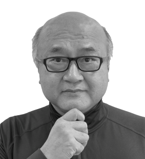
Junji Kido
Distinguished Research Professor, Frontier Center for Organic Materials, Yamagata University
Abstract: Inspired by the first report of a two-layer heterojunction OLED by Tang and VanSlyke in 1987, our group began OLED research at Yamagata University in 1989. Our first OLED device was a terbium-complex-based green emitter that exhibited triplet-state emission. We then shifted our focus to polymer OLEDs, leading to the development of the world’s first white OLEDs. Subsequently, we developed vacuum-deposited white OLEDs, marking the beginning of our research on OLED lighting.
OLED performance has advanced steadily over the past three decades. In 2003, our group first reported tandem OLEDs at SID, demonstrating a device architecture capable of achieving both high brightness and long operational lifetime. In 2011, Lumiotec commercialized the world’s first OLED lighting panels. Subsequently, LG adopted tandem white OLEDs with color filters for the mass production of large-size OLED display panels. Today, OLED displays are widely used in consumer electronics and are predominantly manufactured by vacuum deposition.
In this talk, I will describe how these innovations were conceived and developed over the past 37 years, highlighting the key ideas behind each breakthrough and discussing future directions for OLED technology.
Bio: Prof. Kido received his B.S. degree in Applied Chemistry from Waseda University, Tokyo, Japan, in 1984, and his Ph.D. degree in Polymer Chemistry from Polytechnic University (now part of New York University), New York, USA in 1989. In the same year, he joined the Department of Polymer Chemistry at Yamagata University in Japan as an Assistant Professor. He was promoted to Associate Professor in 1995 and to full professor in 2002. In 2011, he was appointed Distinguished Research Professor, and in 2024, he was conferred the lifetime title of University Fellow.
His research focuses on organic electronic materials and devices, particularly organic light-emitting devices (OLEDs). He invented white-light-emitting OLEDs in 1993 and has continuously worked on developing high-performance OLEDs. The Wall Street Journal (May 10, 1995) cited his work in an article titled “Japanese Light Researcher May Turn LED into Gold.”
His contributions have been recognized by numerous awards, including the Society Award from the Society of Polymer Science, Japan; the Fellow Award and the Karl Ferdinand Braun Award from the Society for Information Display, U.S.A. (in 2008 and 2015, respectively); and the Society Award from the Chemical Society of Japan in 2021. He also received the Herman F. Mark Technology Medal from Polytechnic University in 2007 and the Medal with Purple Ribbon from the Emperor of Japan in 2013.
Parking Details:
Seminar Location: AllenX 101X, (420 Via Palou, Stanford, CA 94305, Paul G. Allen Building)
Garage/Lot Options (click here for more):
Via Ortega Garage (parking zone 7202): 498 Via Ortega, Stanford, CA 94305 (Map from garage to event location)
Rates (click here for more):
Per hour = $4.46
Day pass = $35.68
The following three options are available to pay for parking:
- Download the app and set up a Park Mobile account. It is recommended to do this before coming to campus.
- Pay Online (No app or account needed): Navigate to app.parkmobile.io/zone/start or text “PARK” to 77223 and follow the steps to pay.
- Pay-By-Phone if you don’t have a smartphone or prefer an automated voice system, call ParkMobile at 877.727.5718 to start your parking session.
Safety Protocol: Stanford strongly recommends to mask when ill with respiratory symptoms. Stanford University Covid-19 Policies.
