CMOS Circuits for Biomedical Applications
Category: Seminars
We welcome you to join us in-person and on Zoom for our April eWEAR Seminar.
Date: Monday, April 27, 2026
Time: 12:30 pm to 1:30 pm PDT
Location: Y2E2 299 & Zoom
Registration: Please click here to register
Lunch will be provided at 12:00pm for in-person attendees & a chance to talk with the speaker after the seminar.
“CMOS Integrated Circuits: A Versatile Platform for Affordable, Low-Power Biomedical Devices”
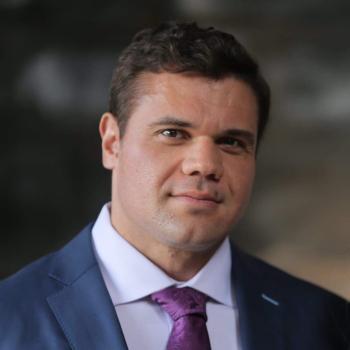
Constantine Sideris
Associate Professor of Electrical Engineering, Stanford University
Abstract: Over the past decade, biomedical device technologies have rapidly evolved, significantly transforming healthcare delivery and diagnostics. Complementary Metal-Oxide-Semiconductor (CMOS) integrated circuits, traditionally known as the cornerstone of digital computing, have emerged as a powerful platform driving advancements in biomedical devices. CMOS circuits provide unmatched capabilities, including high integration density, exceptional sensitivity, and cost-effective mass production, making them ideal for developing next-generation biomedical systems. In this presentation, I will discuss how the precise manipulation and detection of electric and magnetic fields enabled by CMOS technology can facilitate the creation of innovative, high-performance, and low-power biomedical devices. Highlighted examples, drawn from our recent research, will cover diverse applications such as magnetic biosensors for wash-free immunodetection at the Point-of-Care, magnetic localization techniques for ingestible “smart” pills, wireless wearable systems for motion tracking, high-voltage neural stimulation for optic nerve and deep brain stimulation with fully on-chip charge balancing, and the first pulse-mode Electron Paramagnetic Resonance (EPR) spectrometer integrated onto a single CMOS chip.
Bio: Constantine Sideris is an Associate Professor of Electrical Engineering at Stanford University. Previously, he was an Assistant Professor at the University of Southern California from 2018 to 2025 and an Associate Professor from 2025 to 2026. He received the B.S., M.S., and Ph.D. degrees with honors from the California Institute of Technology in 2010, 2011, and 2017 respectively. He was a visiting scholar at UC Berkeley’s Wireless Research Center from 2013 to 2014. He was a postdoctoral fellow in the departments of Electrical Engineering and Computing and Mathematical Sciences at Caltech from January 2017 to August 2018.
He was the recipient of an ONR YIP award in 2023, an NSF CAREER award in 2021, an AFOSR YIP award in 2020, an AFOSR DURIP award in 2021, the Caltech Leadership Award in 2017, and an NSF graduate research fellowship in 2010. His research is highly interdisciplinary and bridges the fields of bioengineering, medicine, applied mathematics and computation with electrical engineering and physics.
His research interests include analog/RF integrated circuits, photonic integrated circuits, and computational electromagnetics for biomedical and biosensing applications and wireless communications. His current interests in biomedical devices include portable Point-of-Care in-vitro biosensors, wearable devices for real-time monitoring and analysis of biological signals, ingestible “smart” pills, and implantable devices. His current interests in computational electromagnetics include developing fast algorithms for simulating RF and nanophotonic devices and coupling them with efficient optimization algorithms to achieve the automated design of new, high-performance electromagnetic devices.
Parking Details:
Seminar Location: Y2E2 Building, Room 299 (473 Via Ortega, Stanford, CA 94305, Y2E2 Building)
Garage/Lot Options (click here for more):
Via Ortega Garage (parking zone 7202): 498 Via Ortega, Stanford, CA 94305 (Map from garage to seminar location enter Y2E2 building by Coupa Cafe)
Rates (click here for more):
Per hour = $4.46
Day pass = $35.68
The following three options are available to pay for parking:
- Download the app and set up a Park Mobile account. It is recommended to do this before coming to campus.
- Pay Online (No app or account needed): Navigate to app.parkmobile.io/zone/start or text “PARK” to 77223 and follow the steps to pay.
- Pay-By-Phone if you don’t have a smartphone or prefer an automated voice system, call ParkMobile at 877.727.5718 to start your parking session.
Safety Protocol: Stanford strongly recommends to mask when ill with respiratory symptoms. Stanford University Health Alerts.
