Monitoring health with wearables during sleep
Category: Seminars
We welcome you to join us in-person and on Zoom for our June eWEAR Seminar.
Date: Monday, June 2, 2025
Time: 12:30 pm to 1:30 pm PDT
Location: Stanford University (Y2E2 Building, Room 299 parking details below) & on Zoom
Lunch will be provided at 12:00pm for in-person attendees & a chance to talk with the speakers after the seminar.
Registration: Please click here to register
Speakers:
Lara Weed
12:30 pm to 1:00 pm
“Wearable Sensors for Real-World Circadian Monitoring: From Science to Application”
Matthew Wiggins, PhD
1:00 pm to 1:30 pm
“Development Considerations of Samsung’s Sleep Apnea Risk Detection Feature”
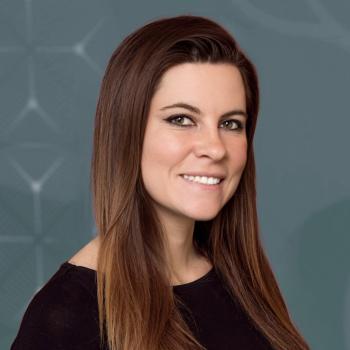
Lara Weed
PhD Candidate in Bioengineering, Stanford University
Abstract
Bio
Prior to Stanford, Lara obtained a Bachelor’s in Biomedical Engineering, with minors in mathematics and chemistry, at the University of Vermont in 2020. She earned her Master’s in Bioengineering from Stanford University in 2022 and is expecting to complete her PhD in 2026.

Matthew Wiggins, PhD
Senior Director, Head of Digital Health Solutions Lab, Samsung Research America
Abstract
Bio
- Software-as-a-medical-device (SaMD) apps like ECG Monitor Feature, Blood Pressure Monitor Feature, and Sleep Apnea Feature, including the associated regulatory, clinical/usability validation, risks management, and quality system deliverables,
- Wellness apps like Samsung Health, and
- Health Services, like HeartWise, a remote cardiac rehabilitation program, jointly developed and run with Kaiser Permanente.
He specializes in leading health service and medical device and programs involving signal acquisition, processing, and subsequent system inference with a focus on physiological systems and biosignals. Prior to his work at SRA, he led the Physiological Algorithms, QA, and RA teams in Samsung’s Strategy and Innovation Center where he led the development and FDA clearance of the Samsung Cardioband. He has also led the Algorithm Software Group for HeartWare’s Ventricular Assist Device (HVAD) Pal controller (since acquired by Medtronic), an FDA Class III, safety critical medical device to keep late stage heart failure patients alive while they await a transplant. Matthew has also won small business grants from the US government and led programs employing signal/image processing, sensor systems, and machine learning for energy monitoring/reduction, track/tag/locate scenarios, and high accuracy inertial measurement systems.
Dr. Wiggins received his B.S. and M.S. in Electrical Engineering and Ph.D. in Bioengineering from the Georgia Institute of Technology as well as well as an Engineering Leadership certificate from UC Berkeley.
Parking Details
Seminar Location: Y2E2 Building, Room 299 (473 Via Ortega, Stanford, CA 94305, Y2E2 Building)
Garage/Lot Options (click here for more):
Via Ortega Garage (parking zone 7202): 498 Via Ortega, Stanford, CA 94305 (Map from garage to seminar location enter Y2E2 building by Coupa Cafe)
Rates (click here for more):
Per hour = $4.46
Day pass = $35.68
The following three options are available to pay for parking:
- Download the app and set up a Park Mobile account. It is recommended to do this before coming to campus.
- Pay Online (No app or account needed): Navigate to app.parkmobile.io/zone/start or text PARK to 77223 and follow the steps to pay.
- Pay-By-Phone if you don’t have a smartphone or prefer an automated voice system, call ParkMobile at 877.727.5718 to start your parking session.
Safety Protocol: Stanford strongly recommends to mask when ill with respiratory symptoms. Stanford University Covid-19 Policies.
