Nobel Sustainability Lecture & Networking
Category: Seminars
We welcome you to join us in-person for a special October lecture & networking event jointly hosted by eWEAR & Sustainability Accelerator.
Date: Tuesday, October 8, 2024
Time: 4:00 pm to 5:45 pm PDT
4:00 pm – 5:15 pm | Lectures, Q&A
5:15 PM – 5:45 PM | Networking
Location: Stanford University (Shriram Center, Tea Room; parking details below)
Registration: Please click here to register
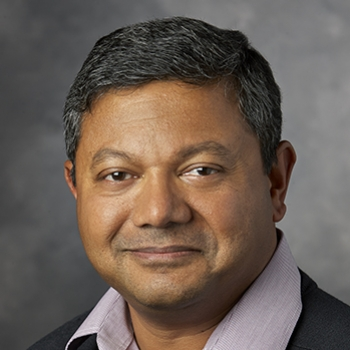
Arun Majumdar
Dean of the Doerr School of Sustainability, Stanford University
Opening Remarks
Bio: In October 2009, Dr. Majumdar was nominated by President Obama and confirmed by the Senate to become the Founding Director of the Advanced Research Projects Agency – Energy (ARPA-E), where he served until June 2012 and helped ARPA-E become a model of excellence and innovation for the government with bipartisan support from Congress and other stakeholders. Between March 2011 and June 2012, he also served as the Acting Under Secretary of Energy, enabling the portfolio of Office of Energy Efficiency and Renewable Energy, Office of Electricity Delivery and Reliability, Office of Nuclear Energy and the Office of Fossil Energy, as well as multiple cross-cutting efforts such as Sunshot, Grid Modernization Team and others that he had initiated. Furthermore, he was a Senior Advisor to the Secretary of Energy, Dr. Steven Chu, on a variety of matters related to management, personnel, budget, and policy. In 2010, he served on Secretary Chu’s Science Team to help stop the leak of the Deep Water Horizon (BP) oil spill. Dr. Majumdar serves as the Chair of the Advisory Board of the US Secretary of Energy, Jennifer Granholm. He led the Agency Review Team for the Department of Energy, Federal Energy Regulatory Commission and the Nuclear Regulatory Commission during the Biden-Harris Presidential transition. He served as the Vice Chairman of the Advisory Board of US Secretary of Energy, Dr. Ernest Moniz, and was also a Science Envoy for the US Department of State with focus on energy and technology innovation in the Baltics and Poland. He also serves on numerous advisory boards and boards of businesses, investment groups and non-profit organizations. After leaving Washington, DC and before joining Stanford, Dr. Majumdar was the Vice President for Energy at Google, where he assembled a team to create technologies and businesses at the intersection of data, computing and electricity grid. Dr. Majumdar is a member of the US National Academy of Sciences, US National Academy of Engineering and the American Academy of Arts and Sciences. His research in the past has involved the science and engineering of nanoscale materials and devices, especially in the areas of energy conversion, transport and storage as well as biomolecular analysis. His current research focuses on redox reactions and systems that are fundamental to a sustainable energy future, multidimensional nanoscale imaging and microscopy, and an effort to leverage modern AI techniques to develop and deliver energy and climate solutions. Prior to joining the Department of Energy, Dr. Majumdar was the Almy & Agnes Maynard Chair Professor of Mechanical Engineering and Materials Science & Engineering at University of California–Berkeley and the Associate Laboratory Director for energy and environment at Lawrence Berkeley National Laboratory. He also spent the early part of his academic career at Arizona State University and University of California, Santa Barbara. Dr. Majumdar received his bachelor’s degree in Mechanical Engineering at the Indian Institute of Technology, Bombay in 1985 and his Ph.D. from the University of California, Berkeley in 1989.

Peter Nobel
Chairman of the Board of Trustees, Nobel Sustainability Trust
Bio:
He has an extensive track record of positioning companies for successful market share growth in various international industrial markets, such as the global HVAC industry.
Peter has extensive experience with several CEOs roles in different industries and executive positions in sales and marketing, R&D and manufacturing at global companies such as Alfa Laval and SWEP International.
He has significant expertise in successfully navigating long sales cycles for industrial component for various global industry sectors and implemented heat transfer products with an exponential growth resulting in world-wide and dominating market shares.
Peter Nobel has also co-founded and run start-ups companies in the clean-tech sector to develop and market a compact and efficient heat cell for applications in the heating industry and developed new methods in water purification technology. He holds patents as well as international pending patent applications for water purification technology and listed patents in heat exchanger technology.
Peter works actively as advisory consultant to company boards in e.g. Japan and Hong Kong.

Myron Scholes
Nobel Prize in Economic Sciences; The Frank E. Buck Emeritus Professor of Finance, Stanford University
Talk Title: “Uncertainty, Sustainability and AI”
Bio: Abstract:
Add this event to your calendar (Please note you might need to open the downloaded file to add to your calendar)
Parking Details
Seminar Location: Shriram Center, Tea Room (443 Via Ortega, Stanford, CA 94305, Shriram Center) Enter the room from the steps to Sunken Terrace from the Quad
Garage/Lot Options:
Via Ortega Garage: 498 Via Ortega, Stanford, CA 94305 (Map from garage to seminar location Enter the room from the steps to Sunken Terrace from the Quad)
Rates:
Free after 4:00 pm
The following three options are available to pay for parking:
- Download the app and set up a Park Mobile account. It is recommended to do this before coming to campus.
- Pay Online (No app or account needed): Navigate to app.parkmobile.io/zone/start or text PARK to 77223 and follow the steps to pay.
- Pay-By-Phone if you don’t have a smartphone or prefer an automated voice system, call ParkMobile at 877.727.5718 to start your parking session.
Safety Protocol: Stanford University Covid-19 Policies. Stanford strongly recommends masking in crowded outdoor settings and when ill with respiratory symptoms.
